The Analog Soul of the Pagani Utopia
In an era of relentless digitalization, the Pagani Utopia emerges as a masterpiece of mechanical purity. We explore why Horacio Pagani’s latest creation prioritizes visceral emotion over automated perfection.
November 17, 2026
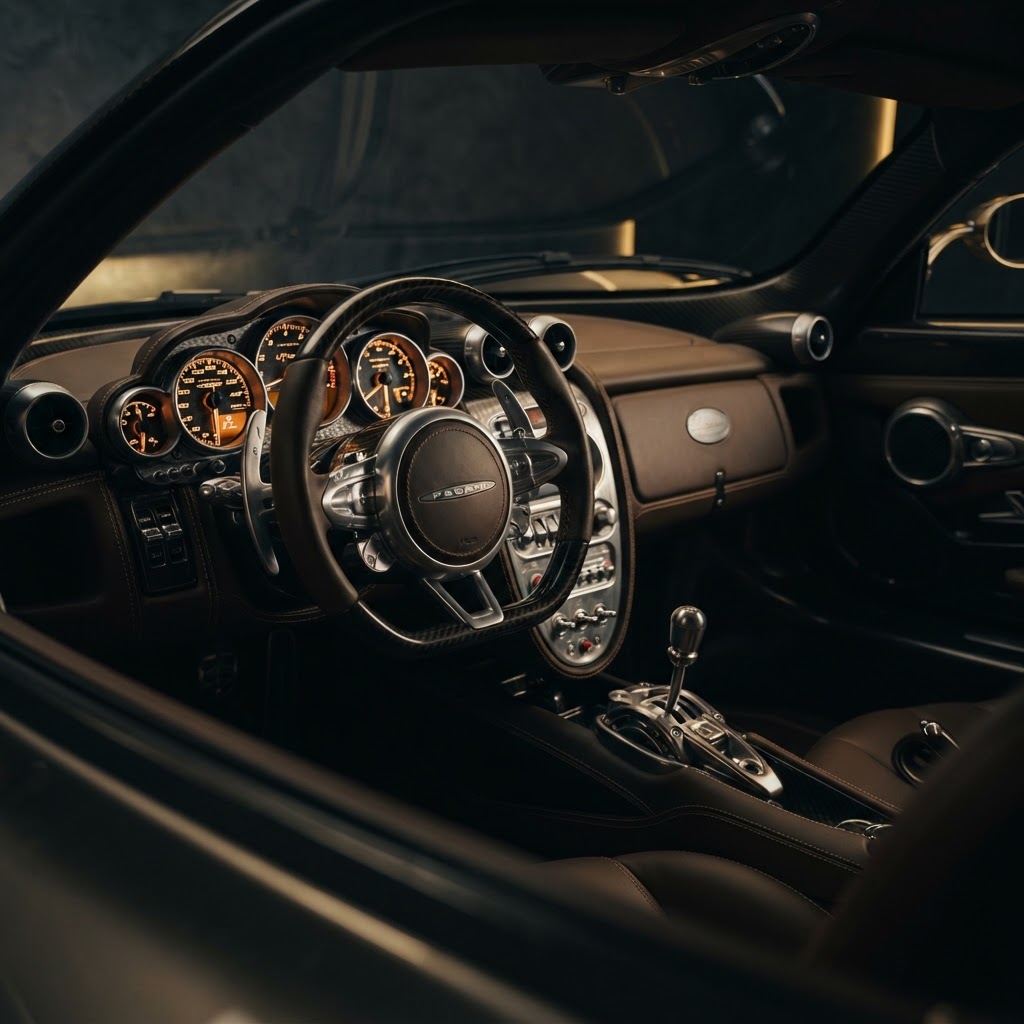
Driving a hypercar in 2024 often feels like operating a sophisticated computer on wheels. While the metrics of performance—downforce, torque vectoring, and hybrid assistance—have reached astronomical heights, something essential has been lost in the pursuit of lap times. Enter the Pagani Utopia. In a world obsessed with electrification and autonomous intervention, Horacio Pagani has chosen a defiant path: the path of the artisan. The Utopia is not merely a vehicle; it is a horological instrument for the road, designed to evoke the spirit of a mechanical wristwatch in an age of smartwatches.
At the heart of the Utopia lies a bespoke 6.0-liter twin-turbocharged V12 engine, developed in collaboration with Mercedes-AMG. It produces 864 horsepower, yet the true marvel is not the output, but the delivery. Eschewing a dual-clutch transmission in favor of a pure seven-speed manual—or an automated manual with a gated shifter—Pagani demands that the driver participate in the act of locomotion. The sound, tuned by the master craftsmen in San Cesario sul Panaro, is reminiscent of a bygone era of motorsport, raw and unfiltered, yet refined with the precision of a symphonic orchestra.
Design-wise, the Utopia avoids the jagged, aggressive geometry that defines modern aero-focused hypercars. Instead, it embraces organic, flowing lines that pay homage to 1960s aesthetics while utilizing the most advanced carbon-titanium composites available today. Inside, the cabin is an exquisite display of analog craftsmanship. There are no expansive touchscreens here. Every gauge is a physical piece of jewelry, every switch is machined from billet aluminum, and the steering wheel is carved from a single block of alloy. It is a space that respects the driver’s intelligence rather than attempting to replace it with software.
For the collector who values the connection between man and machine, the Utopia is a profound statement. It is a reminder that luxury is not defined by the number of pixels on a dashboard, but by the tactile sensation of a weighted gear shift and the subtle smell of hand-stitched leather. As we look toward a future of silent, automated mobility, the Pagani Utopia stands as a monument to the internal combustion engine’s final, glorious evolution. It is a car that does not just transport you from one destination to another; it reminds you why you fell in love with driving in the first place. Whether you are navigating the winding roads of the Austrian Alps or cruising through the coastal vistas near Miami, the Utopia offers an experience that is increasingly rare: absolute, unfiltered presence.